Tracing Blockchain Verification Protocols in Ensuring Outcome Integrity Across Digital Chance Platforms
Paul Reed · Jun 9, 2026

Tracing Blockchain Verification Protocols in Ensuring Outcome Integrity Across Digital Chance Platforms
Blockchain verification protocols have become central to maintaining outcome integrity in digital chance platforms where random results determine player payouts, and these systems rely on distributed ledgers to record each transaction step without centralized control. Researchers at various institutions have documented how smart contracts execute predefined rules for random number generation while participants can audit the entire sequence after the fact.
Core Mechanisms Behind Protocol Design
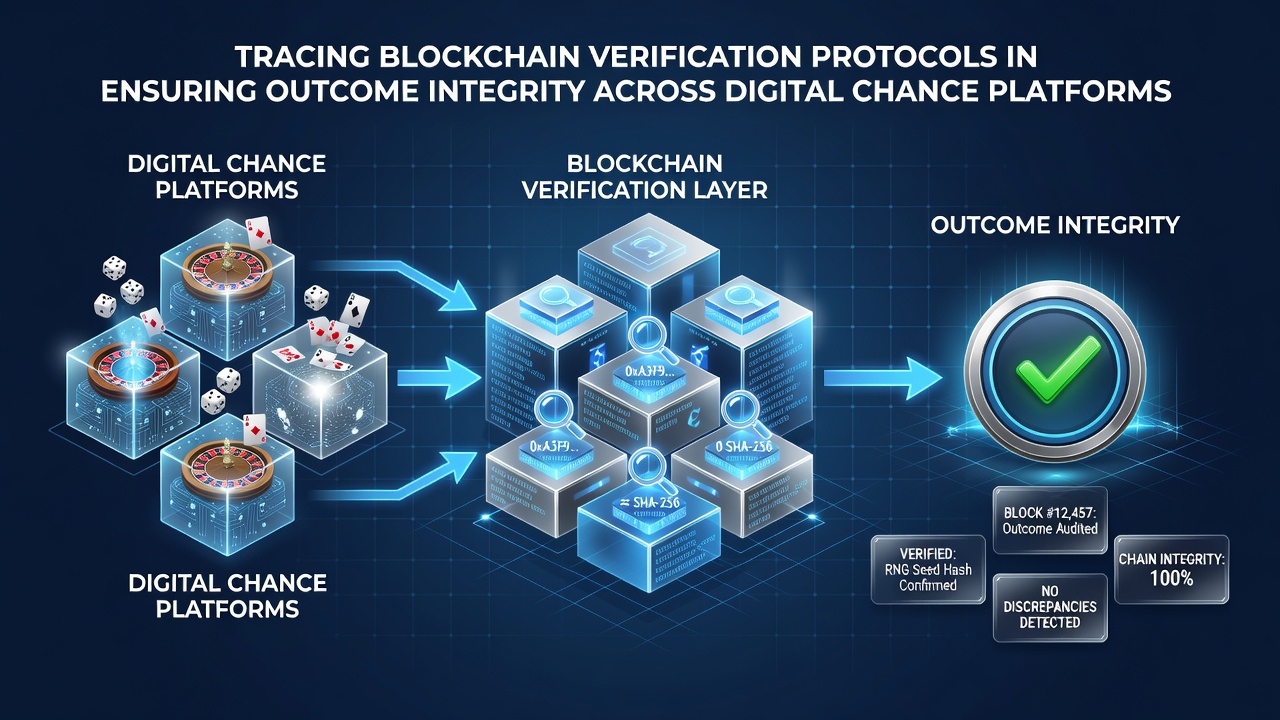
Verification begins when a platform generates a seed through multiple independent sources, and the resulting hash gets committed to the blockchain before any outcome calculation occurs. This commitment prevents retroactive changes because altering even one block would require consensus across the network nodes that maintain copies of the ledger. Data from industry deployments shows that platforms using this approach record every bet and result as immutable entries, which allows external auditors to trace the path from initial seed to final payout.
Protocols such as those based on verifiable random functions integrate cryptographic proofs that confirm the randomness without exposing the underlying inputs until after settlement. Observers note that these proofs reduce disputes because any party can recompute the outcome using the published seed and verify it matches the recorded result on the chain. In June 2026 several platforms reported expanded adoption of these functions following updates to compliance frameworks in multiple jurisdictions.
Implementation Across Major Platforms
Take one operator that integrated a permissioned blockchain layer with its existing random number generator infrastructure; the system publishes commitment hashes at the start of each gaming round while the actual draw happens off-chain and the outcome hash follows immediately. Players and regulators then access a public explorer to confirm that no deviation occurred between commitment and reveal. Studies from academic groups have examined similar setups and found that transaction throughput remains sufficient for high-volume sessions when sidechains handle routine verifications before anchoring summaries to the main ledger.
Another example involves a consortium of operators sharing a common verification node network; each participant submits its seeds through a multi-party computation protocol that distributes trust so no single entity controls the full randomness source. This model has appeared in reports covering North American and Australian operations where regulatory bodies require transparent audit trails for licensed activities.
Regulatory Alignment and Data Standards
Authorities in Nevada have referenced blockchain-based audit capabilities when updating technical standards for remote gaming systems, and similar language appears in guidance issued by the Australian Communications and Media Authority. These frameworks emphasize that verification protocols must allow real-time or near-real-time access to outcome data while preserving player privacy through selective disclosure techniques. Figures released by the International Association of Gaming Regulators indicate that more than thirty licensed operators had deployed some form of on-chain verification by early 2026.
Standards organizations continue to refine data formats so that different platforms can export verification logs in compatible structures. This interoperability matters because cross-border play often requires regulators from separate regions to review the same underlying records without forcing operators to maintain duplicate systems.
Technical Challenges Encountered in Practice
Scalability remains a noted constraint when thousands of bets occur per minute; solutions such as zero-knowledge proofs compress verification data yet still demand significant computational resources during peak periods. Network latency can also affect the timing between commitment and reveal, prompting some platforms to adopt hybrid models that combine on-chain commitments with off-chain execution engines. Those who've studied deployment logs report that error rates drop once operators establish redundant nodes across geographically distributed data centers.
Security audits focus on smart contract code because vulnerabilities in the verification logic could undermine the entire integrity claim. Independent firms conduct penetration testing and formal verification of the contract scripts before mainnet activation, and results from these reviews often become part of the licensing documentation submitted to regulators.
Conclusion
Blockchain verification protocols supply a transparent mechanism for confirming that digital chance platforms deliver outcomes according to published rules. Continued refinements in cryptographic methods and regulatory expectations are likely to shape further integration across additional markets through 2026 and beyond. Operators that maintain accessible audit trails gain advantages when demonstrating compliance to oversight bodies in different regions.