How Sound Design Elements Contribute to Immersion Levels in Electronic Gaming Machines
Lars Sullivan · May 26, 2026

How Sound Design Elements Contribute to Immersion Levels in Electronic Gaming Machines
Electronic gaming machines rely on layered audio cues that sync with visual feedback and player actions to build sustained engagement across extended sessions. Manufacturers integrate these elements through digital signal processing that adjusts volume, pitch, and timing based on game state changes, while regulatory standards in multiple jurisdictions require clear audio prompts for wins, losses, and bonus triggers. Observers note that these designs draw from established principles in human-computer interaction studies, where consistent auditory signals help players track progress without constant visual monitoring.
Core Audio Components in Modern EGMs
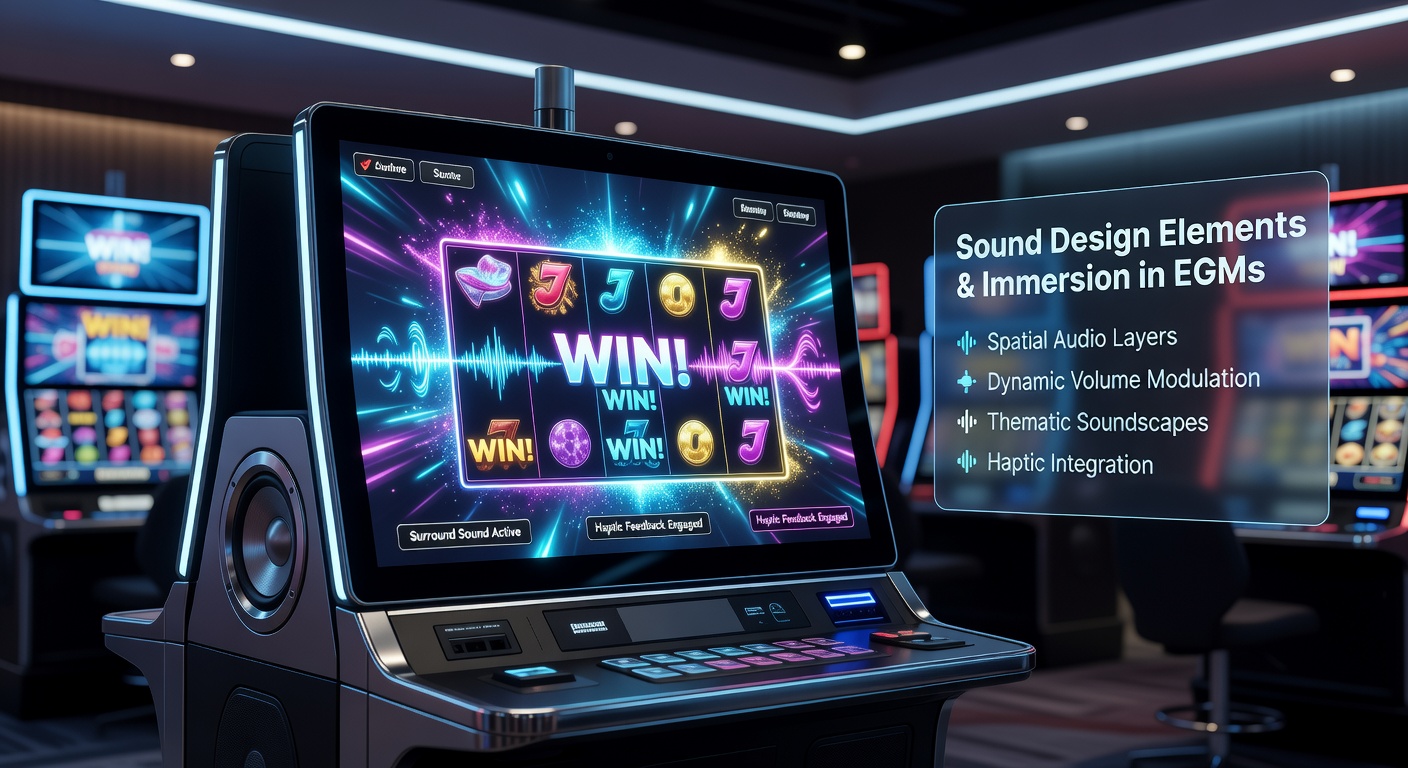
Reel spin sounds form the baseline layer in most machines, featuring variable pitch shifts that rise during near-miss sequences and drop during regular outcomes, according to technical specifications published by major suppliers. Win celebration tracks layer on top with ascending melodic phrases that scale in complexity based on payout size, while ambient loops maintain a steady rhythmic pulse that fills gaps between active events. Researchers at institutions focused on digital entertainment have documented how these components combine to create temporal markers that players use to anticipate reel stops and feature activations.
Button press feedback adds short percussive elements that confirm input registration, reducing perceived latency in high-speed play modes. Bonus round entrances often employ distinct musical stings drawn from orchestral or electronic palettes, which signal a shift in game phase and encourage continued participation through heightened auditory contrast. Data collected from North American casino floors shows consistent implementation of these patterns across thousands of deployed units, with variations mainly in genre-specific instrumentation chosen by individual game studios.
Technical Implementation and Synchronization
Sound engines in contemporary machines use middleware that synchronizes audio events with RNG outcomes and animation timelines, ensuring that reel decelerations coincide with tonal resolutions. This coordination extends to haptic feedback systems that vibrate in time with low-frequency bass hits during significant wins, creating multisensory alignment that reinforces event importance. Engineers achieve this through timestamped event queues that reference both visual frame rates and audio sample clocks, minimizing drift during long play periods.
Adaptive mixing algorithms lower background track volume when voice-over announcements play, maintaining intelligibility for rules explanations or jackpot alerts. In May 2026 several operators in regulated markets began testing updated firmware that incorporates player-selected audio profiles, allowing adjustments to frequency emphasis for accessibility while preserving core cue functionality. These updates followed earlier hardware refreshes that expanded speaker arrays to support spatial audio rendering on select cabinet models.
Player Response Patterns and Design Metrics
Studies conducted by gaming technology research groups indicate that machines featuring graduated audio intensity during feature builds maintain longer average session durations compared with units using static sound sets. Session tracking systems record increased interaction rates following distinctive auditory transitions, such as the shift from standard reel audio to layered percussive builds in free-spin modes. These patterns appear across both land-based and online electronic gaming formats, though implementation details differ due to hardware constraints.
Sound libraries undergo iterative testing where focus groups evaluate cue recognition speed and emotional valence ratings before final integration. Developers reference these results when balancing celebratory volume against ambient restraint, ensuring that frequent small wins do not overwhelm the overall mix. Regional operators in Australia and parts of Europe have incorporated similar evaluation criteria into procurement standards, requiring documented audio testing reports as part of machine certification submissions.
Regulatory and Industry Standards
Jurisdictions maintain technical requirements that address audio clarity for responsible gambling messages and win notifications, with specifications often referencing minimum decibel levels and frequency ranges to accommodate diverse player hearing profiles. The American Gaming Association has published guidelines on consistent audio signaling that help standardize player expectations across different machine types. Compliance documentation submitted by manufacturers includes waveform analysis and playback verification under various ambient noise conditions typical of casino environments.
International suppliers coordinate with certification labs that measure audio output against these benchmarks before machines receive approval for placement. Updates to these standards continue to evolve alongside hardware capabilities, particularly as cabinet designs incorporate additional speaker channels for directional effects.
Future Directions in Audio Integration
Emerging developments include machine learning models that adjust audio parameters in real time based on detected player behavior patterns, such as bet size changes or pause frequency. Early deployments in select test markets have shown these systems can modulate background intensity to match session energy levels while keeping mandatory cues at fixed prominence. Industry reports from the European Gaming and Betting Association highlight ongoing collaboration between audio engineers and game mathematicians to preserve mathematical integrity alongside enhanced sensory layers.
Hardware advances in transducer technology allow finer control over low-frequency response, enabling more nuanced rumble effects during progressive jackpot builds without increasing overall power consumption. These refinements build on established practices while addressing demands for more personalized experiences within shared gaming spaces.
Conclusion
Sound design in electronic gaming machines operates through coordinated layers of reel audio, celebratory cues, ambient tracks, and input confirmation that together support player tracking of game events. Technical synchronization ensures these elements align with visual and mechanical actions, while testing protocols and regulatory requirements maintain consistency and accessibility. Ongoing refinements in adaptive mixing and spatial rendering continue to expand the range of auditory experiences available on regulated gaming floors, reflecting incremental advances driven by both hardware capabilities and established design practices.