Charting Progressive Jackpot Networks and Their Pull on Long-Term Engagement Across Digital Platforms
Paul Reed · Aug 4, 2026
Charting Progressive Jackpot Networks and Their Pull on Long-Term Engagement Across Digital Platforms
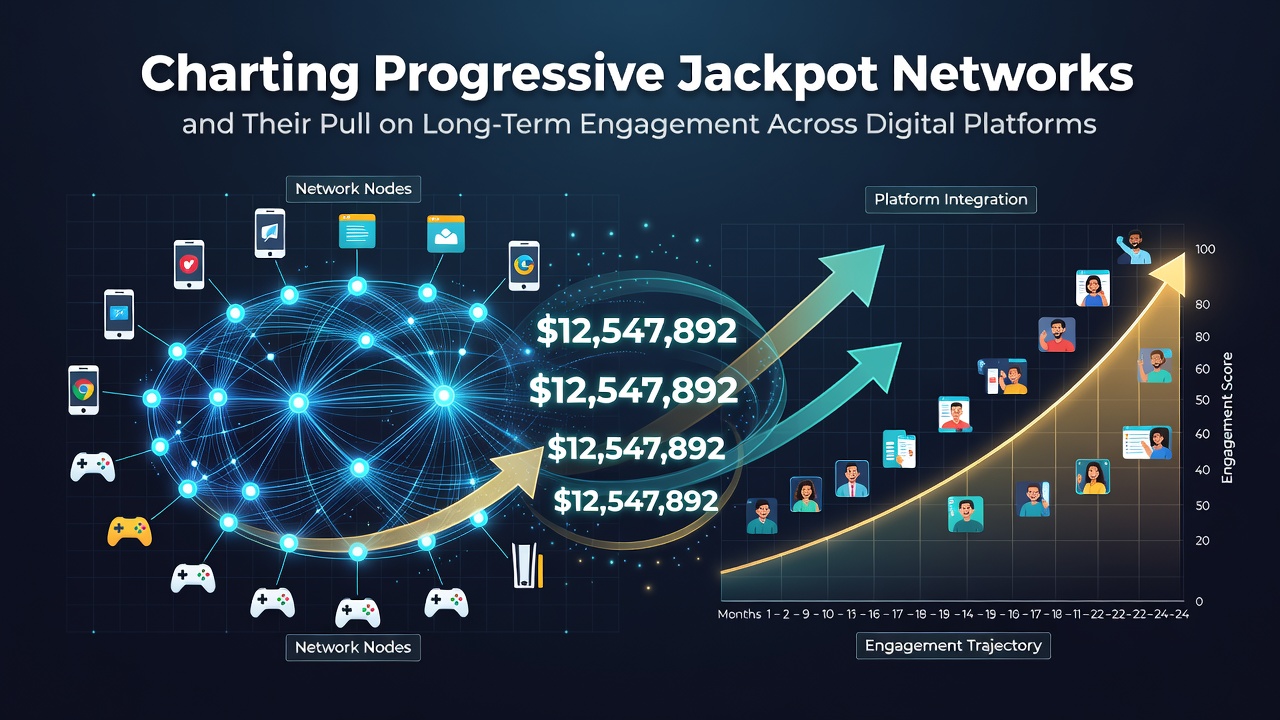
Progressive jackpot networks connect slot machines and table games from separate operators into shared prize pools that accumulate contributions from every qualifying bet, and this structure has expanded steadily through 2026. Multiple platforms feed into these systems, which means a single win can draw from activity across thousands of users rather than isolated sites.
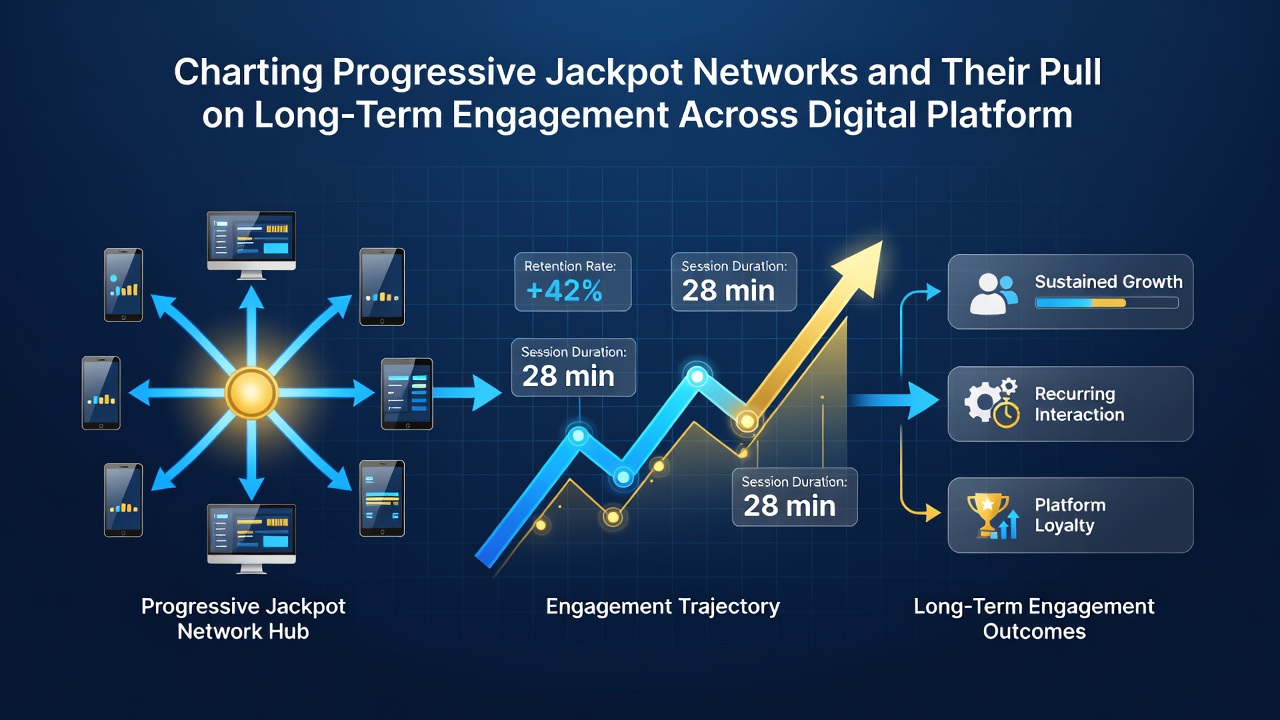
Operators in regulated markets such as New Jersey, Ontario, and parts of Australia report that these networks often sustain higher average session lengths because the visible jackpot totals reset less frequently than standalone prizes. Data from the New Jersey Division of Gaming Enforcement shows that games linked to multi-state or international pools recorded 18 percent longer play sessions in the first half of 2026 compared with non-progressive titles on the same platforms.
How Shared Pools Operate Across Jurisdictions
Each network sets a contribution rate, typically between 0.5 and 2 percent of every wager, which flows into a central meter visible to all participating sites. When a player triggers the jackpot, the system pays out the accumulated amount and restarts the meter at a guaranteed seed level. Because contributions arrive from many operators, the meter climbs faster than any single casino could achieve alone.
Software providers manage the backend while local licensees handle player registration and compliance. This division allows networks to span several regulatory frameworks without requiring uniform licensing. In August 2026, several North American operators expanded their participation in existing European pools, which increased the frequency of meter updates displayed to users during live play.
Retention Patterns Observed in Networked Games
Research conducted by the Australian Gambling Research Centre tracked player cohorts over twelve months and found that accounts engaging with at least one progressive network title showed a 23 percent higher return rate after ninety days than accounts limited to fixed-payout games. The study attributed part of this difference to the anticipation created by growing meters, which appear on lobby screens and in-app notifications.
Separate figures released by the Ontario Lottery and Gaming Corporation indicated that players who joined progressive networks during promotional periods maintained active accounts for an average of 14 additional weeks compared with matched control groups. Observers note that the cross-platform visibility of jackpots appears to reduce churn even when individual operators change their promotional calendars.
Regional Variations in Network Participation
European operators have integrated progressive elements into both slot and live dealer environments for several years, whereas North American markets accelerated adoption after multi-state compacts took effect. In August 2026, regulators in Michigan and Pennsylvania approved additional cross-border pooling agreements that previously existed only within single states.
These expansions coincided with measurable lifts in daily active users on participating platforms. Industry reports compiled by the European Casino Association documented that networked progressive slots accounted for 31 percent of total slot revenue in sampled markets during the second quarter of 2026, up from 24 percent the prior year.
Mechanics That Sustain Continued Play
Networks employ tiered jackpot structures, including mini, minor, major, and mega levels, each with different trigger probabilities and contribution shares. Players can view the current values in real time, which creates repeated decision points about whether to continue or switch games. The visual progression of the meter supplies ongoing feedback without requiring additional game features.
Operators also embed leaderboards and milestone notifications that reference network-wide activity rather than isolated site statistics. These elements extend the perceived scope of participation beyond any single session or platform. Data collected through player loyalty programs shows that users who follow multiple jackpot levels within one network maintain deposit patterns over longer intervals than users focused solely on fixed-reward content.
Conclusion
Progressive jackpot networks continue to shape engagement metrics across digital platforms by pooling contributions from diverse operators and jurisdictions. Available figures from regulatory bodies and research centers indicate consistent differences in session duration and account longevity between networked and standalone titles. As more regions formalize pooling agreements, these systems are likely to maintain their position within operator portfolios through the remainder of 2026 and beyond.